2026-10-24 ·
Protecting Your Chimney from Milwaukie Wind and Falling Debris
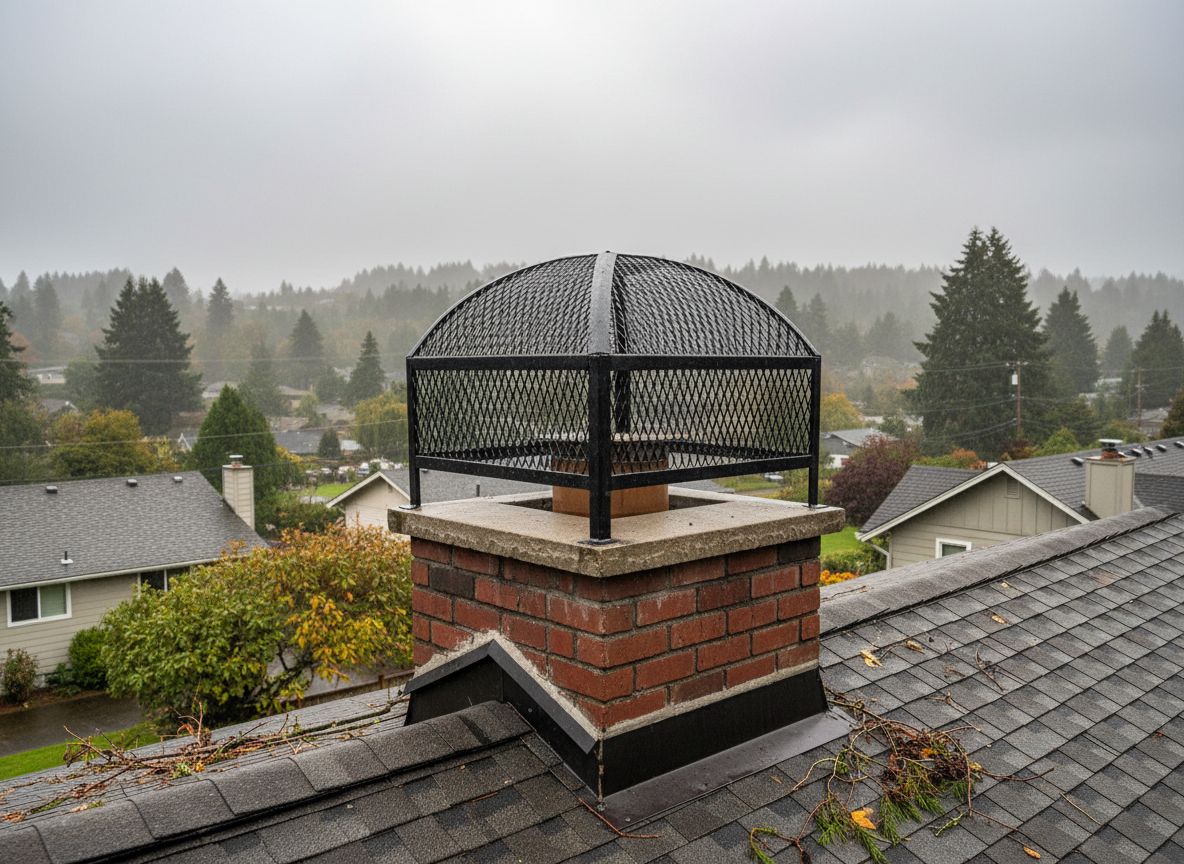
Strong gusts along the Willamette River and falling branches from mature trees in Downtown Milwaukie, Ardenwald, Island Station, and Hector Campbell regularly loosen flue tiles, crack crowns, and dislodge mortar in local chimneys. Installing a properly sized chimney cap cuts wind-driven rain entry by roughly 90 percent and stops most debris before it reaches the flue, while annual maintenance catches early damage before it spreads to the roofline or interior walls.
Wind Exposure Patterns in Clackamas County
Milwaukie sits in a river valley where mild wet winters bring frequent 25–40 mph gusts that funnel between homes in older sections of Ardenwald and Island Station. These winds press against tall brick stacks common in pre-1960 houses, flexing the masonry and opening hairline cracks that let water reach the flue liner. Warm dry summers reduce moisture but leave accumulated leaves and fir needles ready to become airborne missiles during the first fall storms. Chimneys on the windward side of blocks facing the river experience the highest loads, often showing displaced flashing within five to seven seasons. Residents in Hector Campbell report more crown erosion on south-facing stacks because prevailing winds carry grit from nearby roads.
Debris Sources Near the Willamette River and Local Parks
Trees along Milwaukie Riverfront Park and the riverbanks drop limbs, moss, and seed pods that land on roofs and slide into chimneys during gusts. In Historic Milwaukie and around the Milwaukie Museum, large maples and firs shed heavy debris that can block flues or dent metal caps. Wet winters soften this material, turning it into a paste that holds moisture against flue walls and accelerates corrosion. Portland’s urban tree canopy adds extra volume during regional wind events that reach Clackamas County. Without a cap, a single 3-inch branch can crack tiles or jam the damper, requiring chimney cap repair or full chimney cap installation to restore function.
Practical Protection Steps for Milwaukie Homes
Begin with a visual check from the ground each spring for leaning stacks or missing mortar, then schedule chimney maintenance before the next wet season. Choose a stainless-steel cap with 1/4-inch mesh sized to your flue diameter; it blocks most branches while allowing proper draft. On homes in Downtown Milwaukie with low-slope roofs, add extra flashing at the crown joint to handle wind-driven rain. Keep gutters clear of debris from riverfront trees so water does not back up under roof edges near the chimney. For stacks showing prior movement, tuckpointing the exposed joints before installing the cap prevents further wind flexing. These steps extend liner life by 8–12 years in Clackamas County conditions.
When Professional Help Becomes Necessary
If wind has already shifted flashing or you notice interior water stains after storms, contact a local technician for chimney inspection service. Crews familiar with Milwaukie’s older brick and stone chimneys can assess whether chimney waterproofing or liner work is needed alongside cap installation. Homeowners in Historic Milwaukie often combine these repairs during the same visit to limit roof access. SootLock Services operates 24/7 from 10824 SE Oak St #105, Milwaukie, OR 97222 and responds same-day when debris creates a blockage or safety concern.