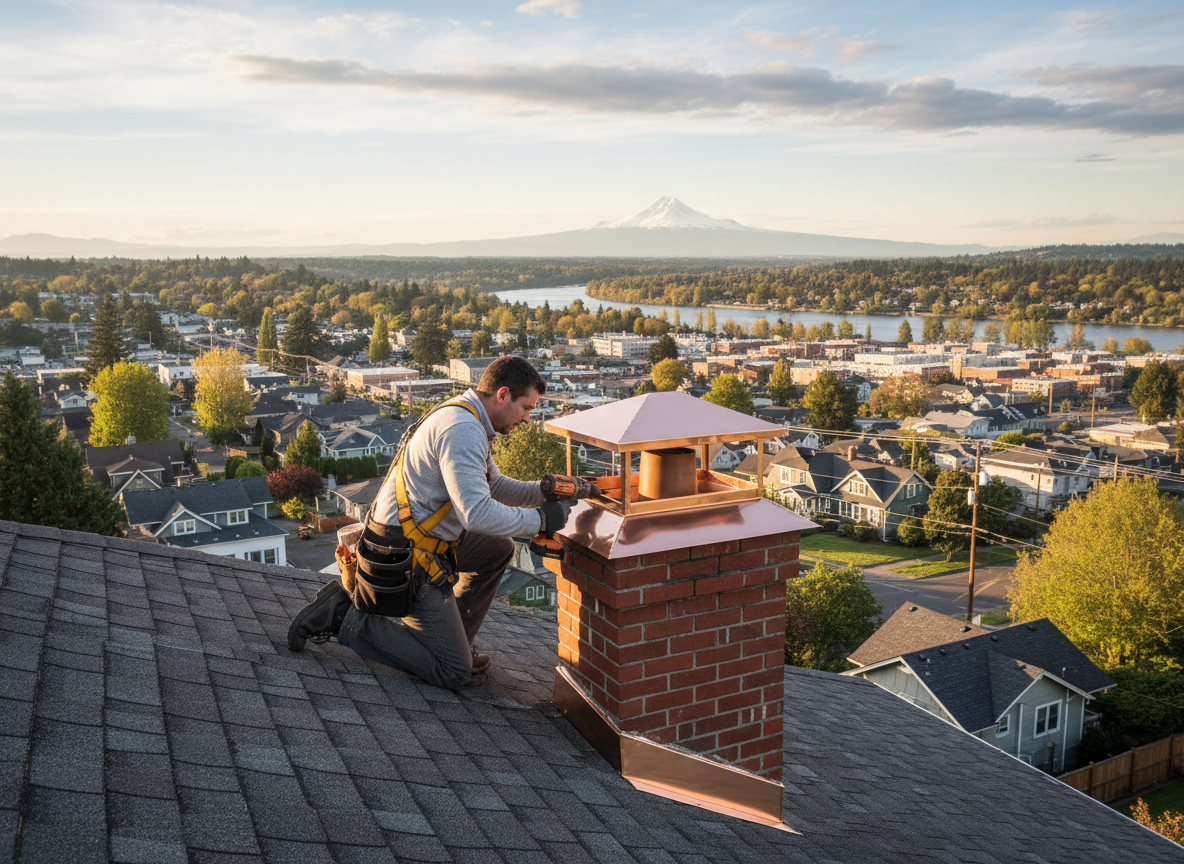
Milwaukie chimneys in neighborhoods like Ardenwald and Hector Campbell often sit on homes built before 1970 with brick flues that absorb moisture during the area's mild wet winters. A proper cap blocks rain while allowing draft, but the constant humidity near the Willamette River and Milwaukie Riverfront Park accelerates rust on standard galvanized caps. We measure the flue top exactly and select stainless steel or copper that holds up to the warm dry summers without expanding or contracting enough to loosen mortar joints.
Downtown Milwaukie and Island Station properties frequently have limited roof access because of steep lots sloping toward the river. Installing a cap here means securing the base with lead flashing that matches the existing roof pitch rather than generic screw-on models that leak within two seasons. We also check for creosote buildup common in wood-burning homes before the cap goes on, since a blocked flue turns the new cap into a pressure point that can crack the crown.
Clackamas County code requires spark arrestors on caps for homes within 10 feet of trees or structures, a common situation along the Portland border. We fit caps with 3/8-inch mesh that meets this rule while still venting properly during the dry summer months when wildfire smoke lingers. Skipping the arrestor or using undersized mesh leads to repeated service calls when embers collect inside the flue.
Older Milwaukie chimneys often have terra-cotta flue liners that sit slightly proud of the brick. A one-size cap will not seat correctly and allows water to run behind the liner during winter storms. We fabricate a custom base plate on site so the cap sits level and sealed, preventing the freeze-thaw damage that shows up every spring in this climate.
Technician insight
In Milwaukie, the thing that catches most people out with chimney cap installation is the slight outward lean on pre-1960 brick chimneys along the Willamette. A level cap on a leaning flue lets water run straight down the back side during our wet winters and rots the crown from behind before anyone notices.
Ardenwald Chimney Cap Replacement
Water stains appeared on the ceiling after a heavy winter rain in an Ardenwald home. We found the existing galvanized cap rusted through and water running behind the terra-cotta liner. We removed the old cap, fabricated a stainless base plate to match the leaning flue, and installed a new cap with proper flashing. No further leaks occurred the following season.
How it works
- 1
Site Assessment
We inspect the flue top, crown, and roof access from the address at 10824 SE Oak St #105 and note any existing damage from Milwaukie winters.
- 2
Material Selection
We choose stainless or copper based on exposure to river humidity and proximity to trees in areas like Ardenwald.
- 3
Custom Fabrication
A base plate is made to fit the exact flue dimensions and existing flashing on older Clackamas County brick chimneys.
- 4
Installation and Sealing
The cap is anchored, flashed, and tested for draft before we leave the property.
Pricing
Cost depends on chimney height, roof pitch, and whether a custom plate is needed for older Milwaukie flues.