2026-10-24 ·
Step-by-Step Guide to Checking Creosote Levels After Burning Season
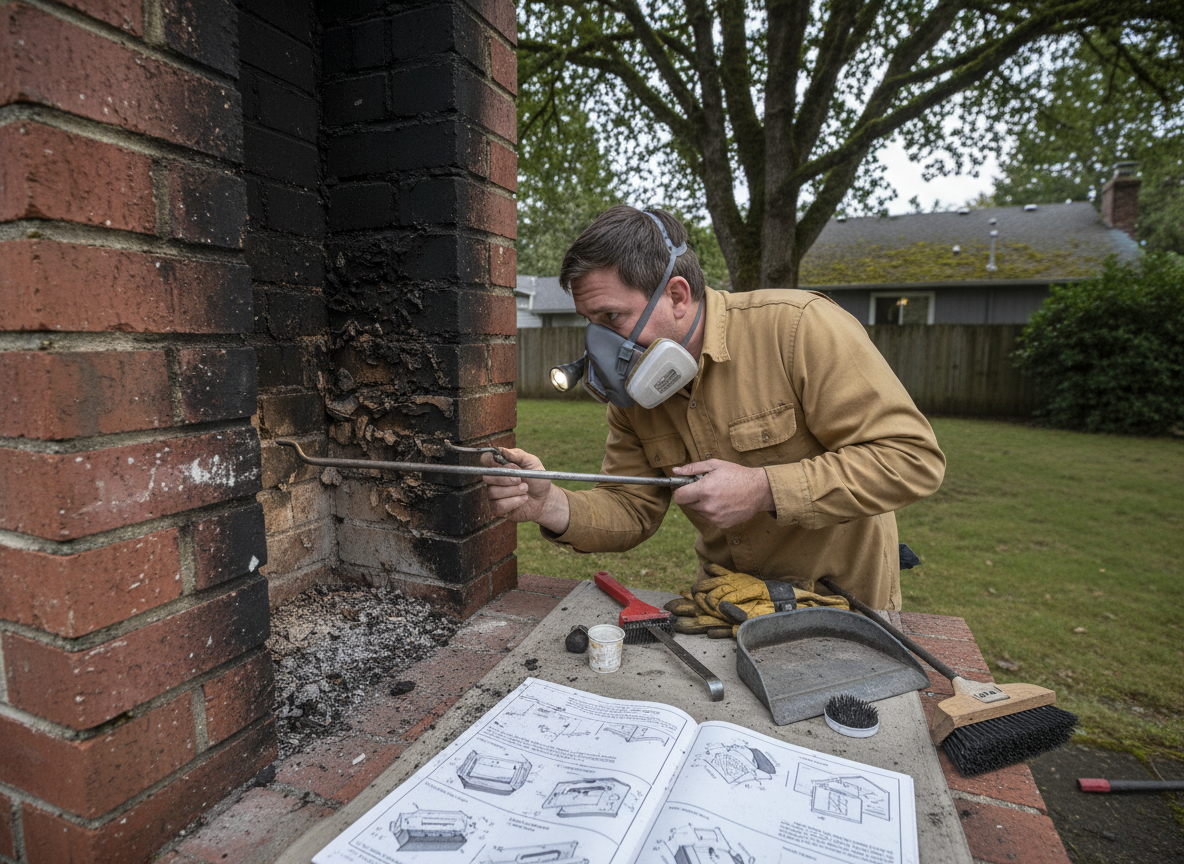
After the burning season ends in Clackamas County, homeowners in Milwaukie can assess creosote levels by performing a systematic visual inspection from both the firebox and the roofline. This process reveals whether buildup has reached a point that restricts draft or increases fire risk, especially in the older masonry chimneys common throughout Hector Campbell and Historic Milwaukie. The inspection takes patience and proper lighting, and any sign of heavy glazing or flakes thicker than a thin layer means professional cleaning is needed before warm dry summers arrive.
Why Creosote Builds Faster in Milwaukie Winters
Mild wet winters along the Willamette River keep chimney flues cooler and damper than in drier inland areas, so smoke cools quickly and deposits more creosote on brick and tile surfaces. Homes in Ardenwald and Island Station often feature mid-century masonry chimneys that retain moisture longer, encouraging Stage 2 and Stage 3 creosote formation during frequent evening fires. Portland commuters who burn wood on weekends add to the load because shorter burns never reach the high temperatures needed to burn off deposits. Checking levels each spring prevents the restricted draft that forces smoke back into living spaces during the next cold snap.
Safety Steps Before Any Inspection
Turn off the furnace and water heater, then open windows to ventilate the room. Wear a dust mask rated for fine particles and use a bright LED headlamp rather than an open flame. Place drop cloths around the hearth to catch loosened material that could stain floors in older Milwaukie homes. Never climb onto a wet roof after spring rains; instead, use binoculars from a safe ladder position on the ground to view the crown and flue opening. These precautions reduce the chance of slips near the Willamette River bluffs or damage to aging mortar joints.
Inspecting from the Firebox
Remove the damper handle if present and shine the light upward into the flue. Look for shiny black or brown streaks along the rear wall and sides; these indicate recent creosote. Run a gloved hand along accessible surfaces to feel for rough, crusty texture versus smooth glazed buildup. Note any white powdery residue that signals moisture problems common in Clackamas County chimneys exposed to river fog. If the layer appears thicker than a credit card edge or flakes fall when touched, stop and contact a technician rather than attempting removal yourself.
Checking from the Roofline
From a stable position on the ground or a properly secured ladder, examine the top of the flue for narrowing caused by accumulated creosote. In neighborhoods near Milwaukie Riverfront Park, wind-driven debris often mixes with deposits and creates blockages that are easiest to spot from above. Compare the opening size to the clean flue diameter visible at the crown; any reduction greater than 20 percent requires immediate attention. Avoid stepping on the flashing or crown itself, as these areas are frequent sources of leaks in older brick chimneys throughout the county.
Knowing When Professional Service Is Required
If the inspection shows heavy glazing, restricted draft, or any structural cracks, schedule chimney cleaning service right away. Residents in Jennings Lodge and Gladstone often combine this check with chimney inspection service to catch liner issues before summer storms. For homes in Historic Milwaukie, the guide Maintaining Chimneys in Milwaukie’s Older Neighborhoods explains how repeated wet winters accelerate wear on mortar and tile. SootLock Services operates 24/7 from 10824 SE Oak St #105, Milwaukie, OR 97222 and can respond the same day when buildup threatens safe operation.