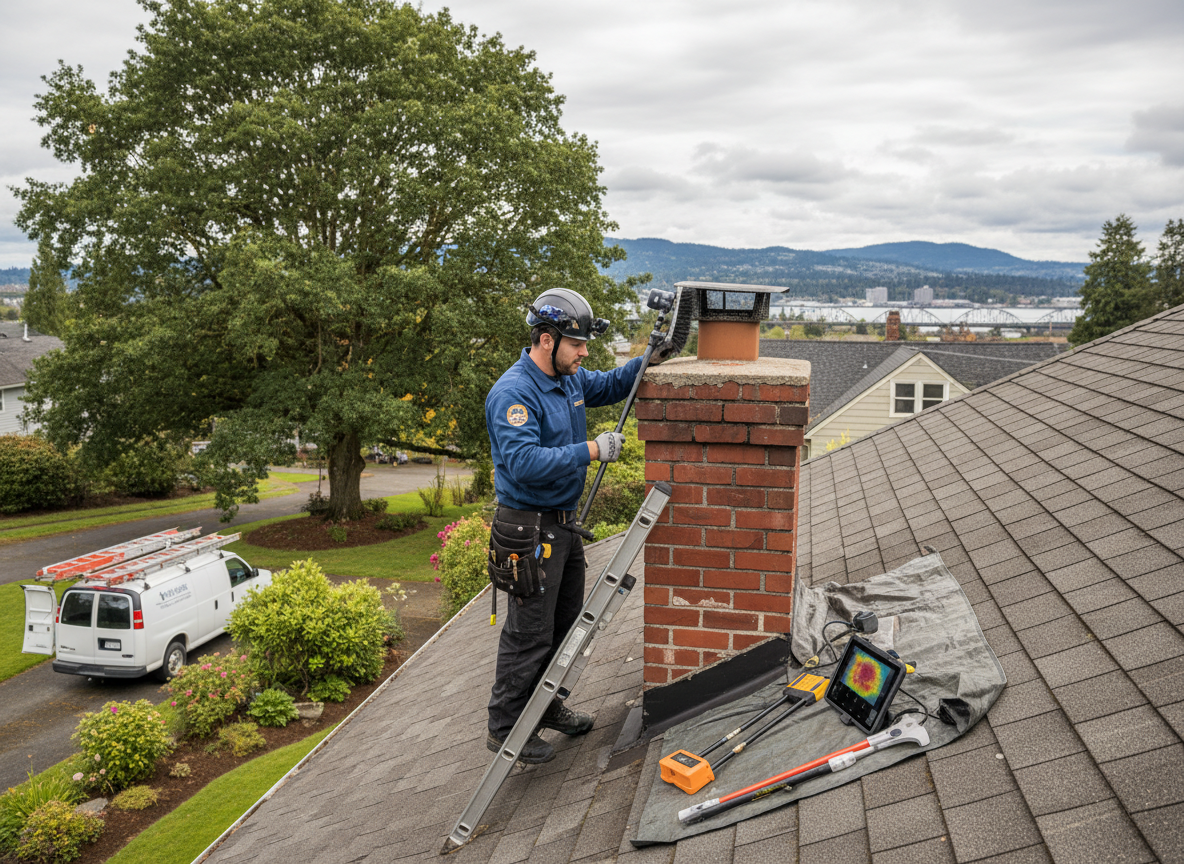
Chimney inspection service in Milwaukie requires attention to moisture intrusion from the area's mild wet winters, which can saturate flue liners and accelerate creosote buildup in homes throughout Downtown Milwaukie and Ardenwald. Older brick chimneys common in these neighborhoods often show hairline cracks that worsen during freeze-thaw cycles, allowing water from the nearby Willamette River humidity to migrate into masonry joints. Inspectors must also evaluate crown condition and flashing where roofs meet chimneys, since warm dry summers mask ongoing water damage until heavy rains return. Access challenges arise in Island Station properties built on sloped terrain near the river, where ladder placement and safety lines become critical during wet conditions.
In Clackamas County homes close to Portland, chimney inspection service often reveals deteriorated clay flue tiles from decades of wood-burning use combined with persistent dampness. Technicians check for spalling bricks and loose mortar in Hector Campbell neighborhoods where soil movement near the river can shift foundations slightly and stress chimney stacks. The process includes camera scans of the flue to detect hidden obstructions or gaps that allow exhaust to leak into living spaces. Homeowners in these areas benefit from inspections before summer dry periods, when hidden issues from winter moisture become evident through interior staining or odor.
Edge cases during chimney inspection service include spark arrestor screens clogged with debris from nearby trees along the riverfront and metal chimneys in newer Ardenwald builds showing corrosion at joints from condensation. Code considerations in Milwaukie focus on maintaining proper clearances to combustibles in older housing stock, where additions have sometimes encroached on chimney surrounds. Inspectors note any signs of water pooling at the base, a frequent issue when downspouts direct runoff toward foundations in low-lying spots near Milwaukie Riverfront Park.
Technician insight
In Milwaukie the thing that catches most people out with chimney inspection service is how the wet winters along the Willamette River push moisture through tiny cracks in older Ardenwald brick chimneys that then freeze and widen by spring. Homeowners often skip checking the crown because it looks fine from the ground, yet water pooling there is what ruins the flue liner over a couple seasons.
Hidden Moisture in Hector Campbell Chimney
A homeowner in Hector Campbell called after noticing interior wall stains during a dry spell. Inspection revealed water had entered through deteriorated flashing and pooled inside the flue during winter rains, softening the clay tiles. We documented the extent with camera footage and recommended targeted repairs before the next wet season to prevent further deterioration.
How it works
- 1
Exterior Assessment
Examine the chimney crown, flashing, and masonry for cracks or missing mortar while noting exposure to river humidity in Milwaukie neighborhoods.
- 2
Flue Inspection
Use a camera to scan the interior liner for creosote deposits, tile damage, or obstructions common after wet winters.
- 3
Structural Check
Evaluate the chimney stack for leaning or separation from the house, especially on sloped lots in Island Station.
- 4
Report and Recommendations
Document findings with photos and advise on needed repairs before the next heating season.
Pricing
Pricing depends on chimney height, access difficulty, and whether a camera scan is needed.