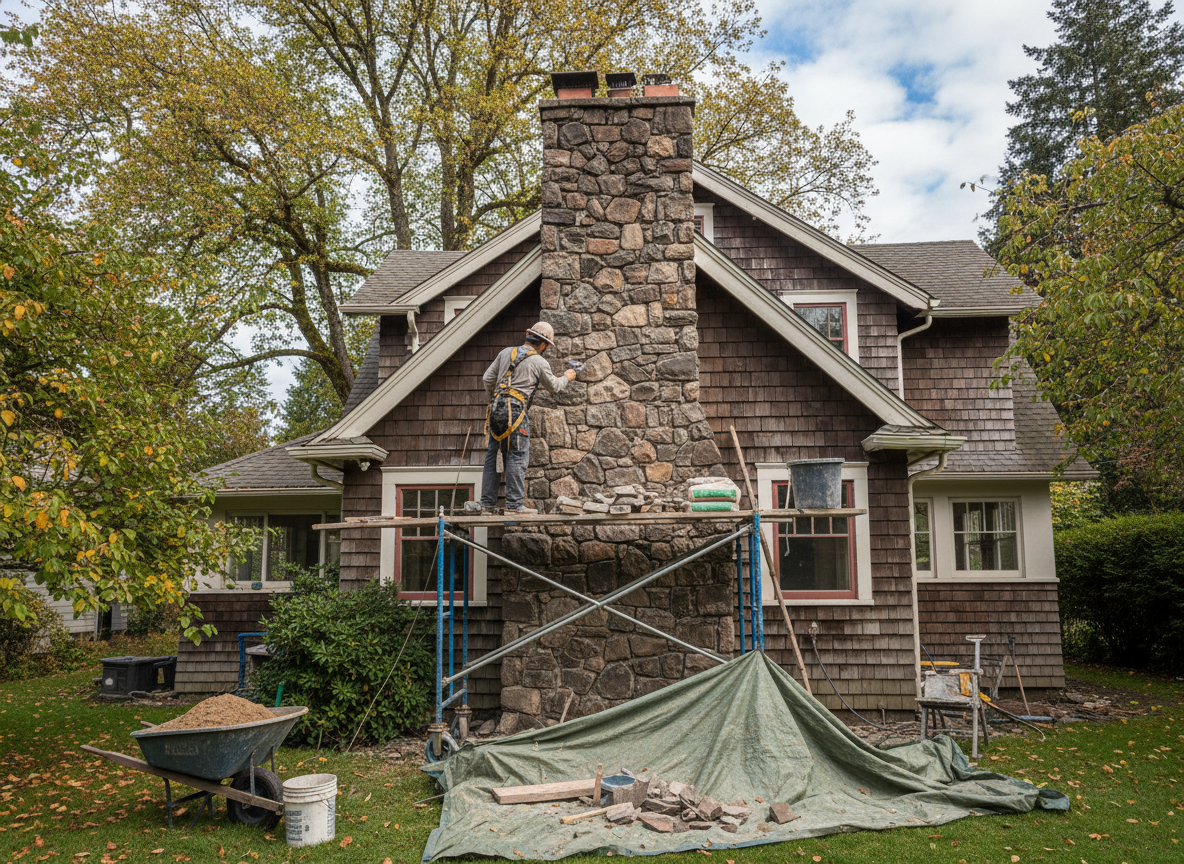
Stone chimneys in Milwaukie homes built before the 1970s, especially in Ardenwald and Island Station, often show mortar erosion where constant winter rain meets the freeze-thaw cycles along the Willamette River. The local mix of damp air and occasional hard freezes pushes moisture deep into the joints, causing stones to loosen and spall. Repair work here requires removing failed mortar without disturbing original stone, then repointing with lime-based mixes that match the softer historic masonry rather than modern Portland cement that traps moisture.
Homeowners in Hector Campbell and Downtown Milwaukie frequently discover hidden issues when water tracks down the flue and damages interior plaster. Flashing at the roofline is a common failure point because many older roofs were not flashed for the steep pitches common in Clackamas County. Proper repair includes cutting new reglets into the stone, installing step flashing, and sealing with copper or lead that holds up to the area's heavy winter precipitation without corroding quickly.
Summer dry spells in Milwaukie can mask ongoing problems until the next wet season arrives. During repair, technicians check for vegetation growth in joints and for shifting caused by soil movement near the river. Work often involves scaffolding on the narrow lots typical of older neighborhoods and coordinating with Portland-area roofers when chimney crowns need rebuilding to prevent future water entry.
Technician insight
In Milwaukie, the thing that catches most people out with stone chimney repair is how the mild wet winters let water sit in the joints for months before anyone notices. Older homes in Ardenwald near the river often have original mortar that has turned to sand, and homeowners try to patch it with caulk that just traps more moisture. Once you open the joints you usually find the real damage runs deeper than the visible cracks.
Ardenwald Stone Chimney Leak
Water stains appeared on the second-floor ceiling after a series of winter storms. Inspection showed failed mortar and missing flashing on the north side of the chimney. We removed deteriorated stone, repointed with lime mortar, and installed new copper step flashing. The leaks stopped and the homeowner avoided interior repairs the following spring.
How it works
- 1
Site Assessment
Inspect the full height of the stone chimney from roof to foundation, checking mortar joints, flashing, and any signs of water tracking into the home.
- 2
Mortar and Stone Preparation
Remove deteriorated mortar and loose stones, clean joints, and select replacement stone that matches the original in color and texture.
- 3
Repointing and Flashing
Repoint with appropriate lime mortar, install or repair step flashing, and rebuild the crown if needed to shed water away from the flue.
- 4
Final Inspection and Cleanup
Verify water-tightness with a water test, remove all debris from the roof and yard, and confirm no new leaks appear after the next rain.
Pricing
Pricing depends on chimney height, extent of stone damage, and whether roof access requires extra scaffolding on older Milwaukie lots.