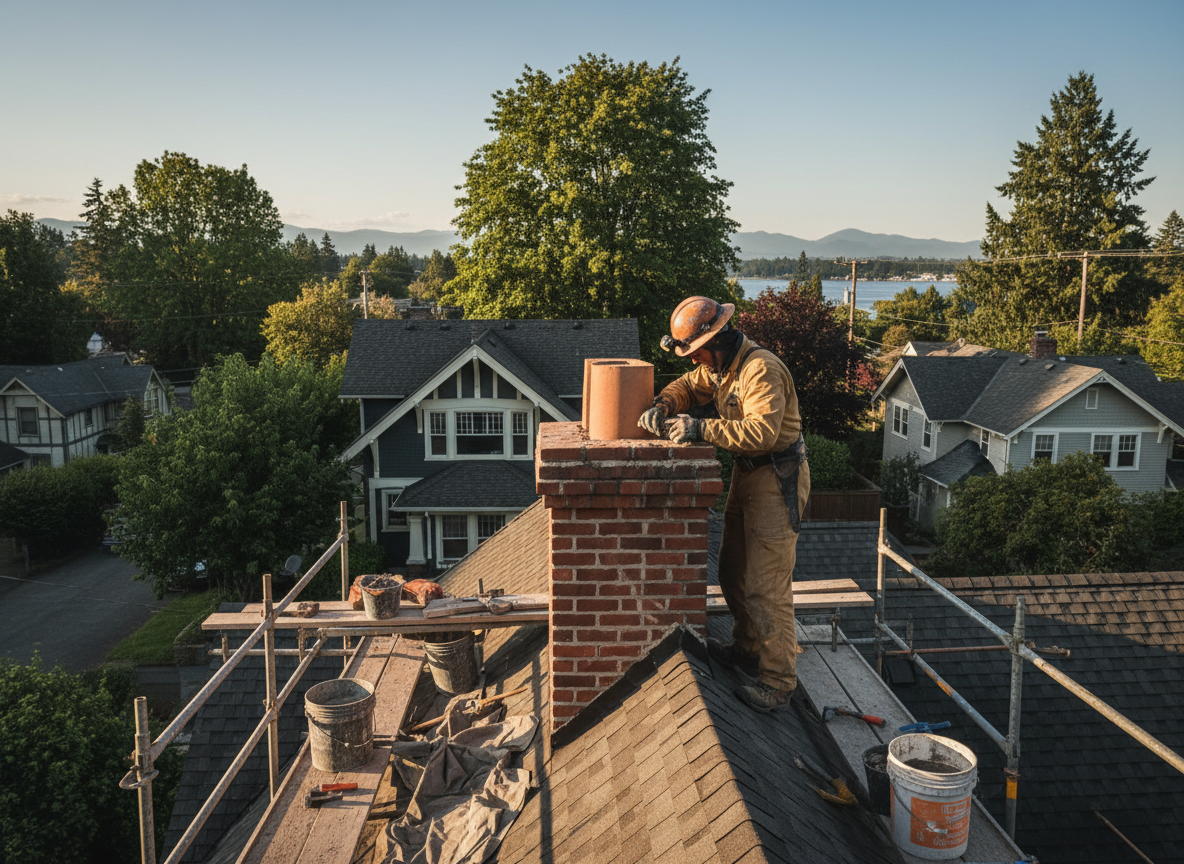
Milwaukie homes built before 1970 in neighborhoods like Ardenwald and Hector Campbell often have unlined brick chimneys that absorb moisture during the region's mild wet winters. Water enters through cracked crowns or missing mortar, then freezes in the limited cold snaps, widening gaps that let smoke and creosote back into living spaces. Repair work here starts with checking the flue tile condition and the interface where the chimney meets the roof, because Portland's prevailing winds drive rain under flashing that was never designed for this climate.
In Island Station and Downtown Milwaukie, many chimneys serve wood stoves added after the original construction. These retrofits frequently lack proper height above the roofline or correct clearances, leading to draft failures when summer dryness turns to fall rains. Technicians must verify that any new mortar or parging matches the original brick expansion rates so the stack does not crack again after the first heavy rain. Access is often tight because mature trees common along the Willamette River block crane placement.
Clackamas County code requires permits for structural chimney work, and inspectors focus on the spark arrestor and rain cap integrity. Homeowners in these older neighborhoods frequently discover that previous repairs used modern cement that does not breathe, trapping moisture inside the masonry and accelerating spalling on the exterior. Proper repair uses lime-based mortar and stainless steel liners sized to the appliance, not the original opening.
Terrain near the river means higher water tables that can push dampness up through the foundation and into the chimney base. This hidden moisture shows up as efflorescence on the lowest courses of brick and requires excavation access in some cases before the upper stack can be sealed.
Technician insight
In Milwaukie the thing that catches most people out with professional chimney repair is the hidden moisture that travels up from the high water table along the Willamette into the base of older brick stacks in Ardenwald and Island Station; they think the problem is only at the crown until we open the lower courses and find the real damage.
Cracked Crown and Hidden Base Moisture
A homeowner in Hector Campbell reported smoke entering the living room after the first fall rains. Inspection showed a deteriorated crown plus efflorescence at the foundation. We removed the failed crown, installed a new concrete cap with proper pitch, repointed the base with lime mortar after drying the masonry, and added a stainless liner sized to the wood stove. Draft improved and no further moisture appeared through the following winter.
How it works
- 1
Site Assessment
Examine the full chimney height, crown, flashing, and flue from roof and interior, noting any water staining or creosote patterns typical after Milwaukie winters.
- 2
Moisture and Draft Testing
Use moisture meters and smoke testing to locate active leaks and confirm draft issues caused by nearby tree cover or roof pitch.
- 3
Material Selection and Repair
Remove failed mortar or tile, install appropriate liner if needed, and repoint with lime-based materials matched to the existing masonry.
- 4
Final Inspection and Documentation
Verify code compliance, reinstall cap and arrestor, and provide the homeowner with photos of the completed work.
Pricing
Upfront quotes after inspection; final cost depends on height, liner needs, and access constraints common in river-adjacent lots.