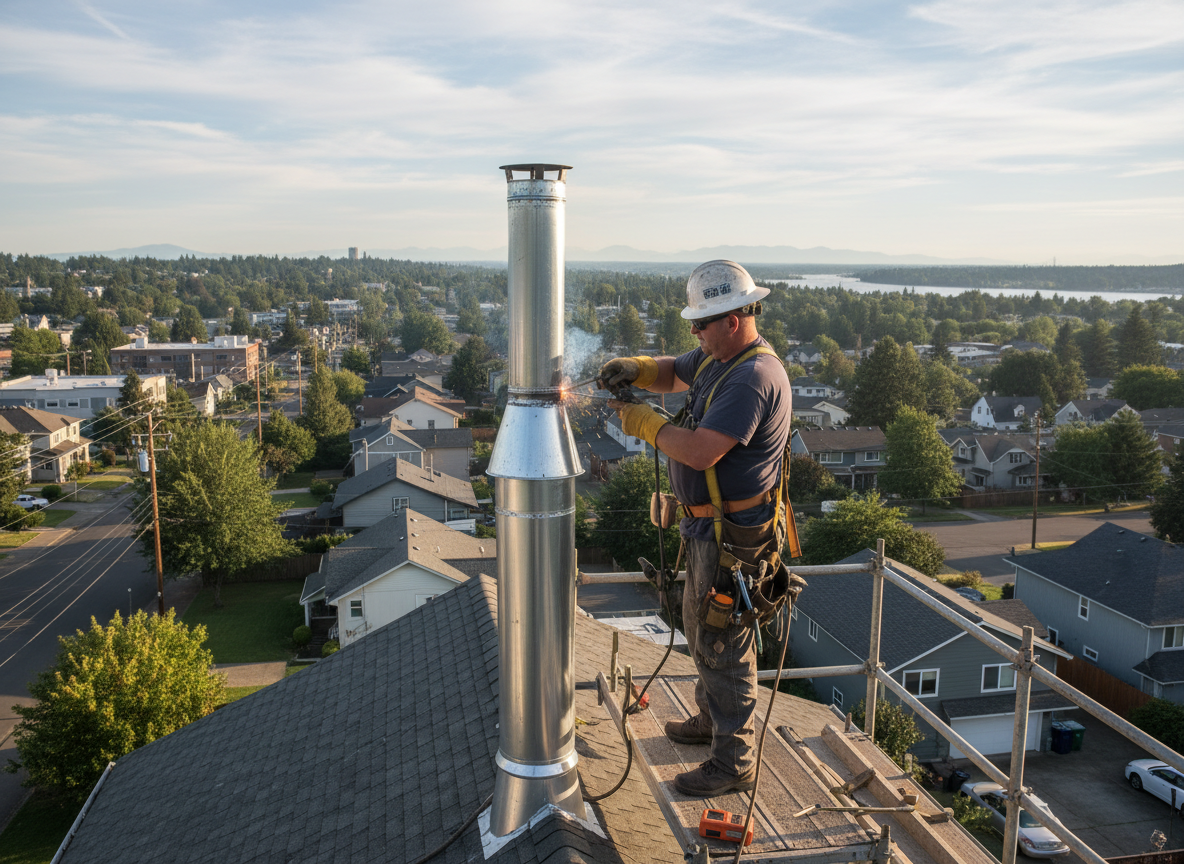
Metal chimneys in Milwaukie homes built before the 1980s often use thin-gauge steel liners that corrode quickly once the protective coating fails. The county's mild wet winters send constant moisture down the flue while warm dry summers create expansion gaps at roof flashings. Homes in Downtown Milwaukie and near the Willamette River see faster deterioration because river humidity keeps the metal damp longer than inland Portland properties. Technicians must check both the interior seam welds and exterior chase for hidden rust before any patch will hold.
When water tracks along the flue it reaches the attic or wall cavity first, creating stains homeowners notice only after mold appears. In Hector Campbell and Ardenwald, many chimneys sit on steep roof pitches that collect leaves and debris, trapping moisture against the metal. Repair work here requires removing the damaged section without disturbing the surrounding masonry or cedar siding common on older Clackamas County houses. New stainless-steel pipe must be sized exactly to the existing draft to avoid backdrafting once the stove or fireplace is relit.
Edge cases include chimneys that were converted from oil to gas; the lower exhaust temperatures leave more condensation inside the metal. Any repair must include a new rain cap and proper flashing to handle the heavy winter rainfall totals typical along the river. Homeowners in Island Station often discover the problem only when the furnace fails inspection because the rusted section has begun to leak combustion gases into living spaces.
Technician insight
In Milwaukie, the thing that catches most people out with metal chimney repair is how the constant winter rain funnels straight into the seam where the metal meets the roof on pre-1980 homes in Ardenwald and Hector Campbell, turning a small pinhole into a full flue replacement if ignored through one wet season.
Corroded Flue Near Willamette River
Homeowner in Island Station noticed ceiling stains after heavy winter rain. Inspection found rusted metal chimney section allowing water past the flashing. Crew removed the damaged length, installed new stainless pipe, and resealed the roof connection. The system passed draft testing and no further leaks occurred.
How it works
- 1
Site Assessment
Technician inspects the full length of the metal flue from roof to appliance, checking for rust perforations and failed seams common after years of Clackamas County rain.
- 2
Section Removal
Damaged metal is cut out while protecting surrounding roof and siding materials typical in Ardenwald and Downtown Milwaukie homes.
- 3
New Liner Installation
Stainless-steel replacement pipe is fitted and sealed at joints, then tied into existing flashing to handle wet winter conditions.
- 4
Draft and Leak Test
System is tested for proper draft and water tightness before the job is complete.
Pricing
Upfront quotes provided after on-site inspection; cost varies by length of flue and extent of rust.