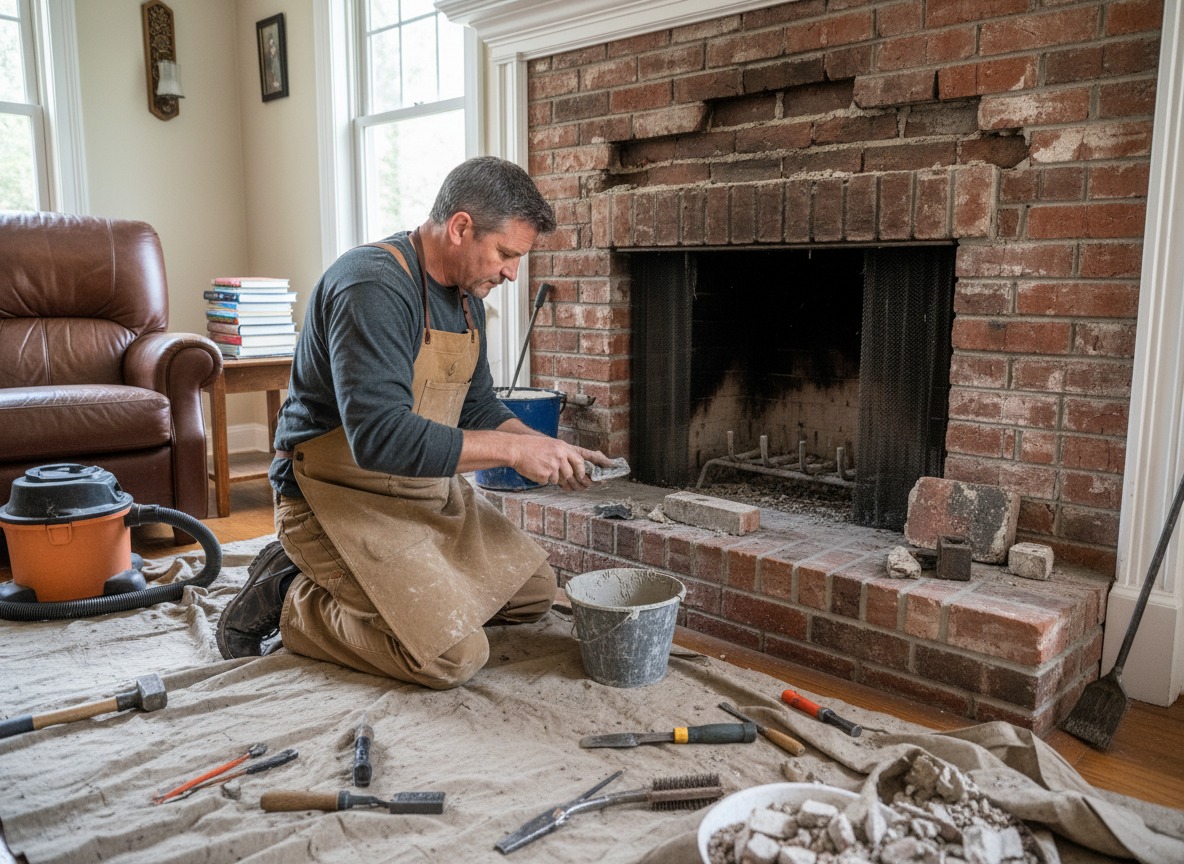
Milwaukie homes in neighborhoods such as Ardenwald and Island Station often feature masonry fireplaces installed before the 1970s. These units sit in houses built on the flat terrain near the Willamette River where mild wet winters allow rainwater to penetrate through cracked crowns and deteriorated mortar. Over repeated cycles the moisture reaches the firebox and smoke chamber, causing spalling brick and loose flue tiles that allow carbon monoxide to migrate into living spaces during the first cold snap of the season.
Repair work here frequently involves replacing damaged refractory panels or rebuilding the firebox with high-temperature mortar rated for continuous 2000-degree exposure. Technicians must also address the exterior chimney chase where warm dry summers bake out remaining moisture and widen hairline cracks that were invisible during winter. In Clackamas County properties close to Downtown Milwaukie or Hector Campbell, inspectors check for improper flashing at the roofline because river humidity accelerates rust on metal dampers and smoke shelves.
Edge cases include fireplaces converted from wood to gas inserts where the original clay liner was never removed, trapping condensation against the brick. Homeowners sometimes attempt DIY tuck-pointing with standard mortar that fails within two winters because it lacks the lime content needed to flex with temperature swings. Proper repair always includes a Level II camera inspection to verify the full flue path before any masonry work begins.
Technician insight
In Milwaukie, the thing that catches most people out with fireplace repair is how the mild wet winters drive moisture deep into the mortar joints of pre-1970s brick fireplaces in Ardenwald and Hector Campbell homes, creating hidden voids that only appear once the first winter fire is lit.
Damper Failure in Island Station Home
Homeowner in Island Station reported smoke rolling into the room after the first rain of the season. Inspection revealed a seized cast-iron damper rusted from river humidity and a cracked smoke shelf behind it. We replaced the damper assembly and rebuilt the shelf with refractory mortar. The fireplace now drafts cleanly with no smoke spillage.
How it works
- 1
Initial Assessment
Technician arrives at the Milwaukie address and examines the firebox, damper, and visible flue sections for water staining and loose masonry.
- 2
Camera Inspection
A Level II video scan checks the entire chimney run for tile cracks or creosote buildup common after repeated wet winters.
- 3
Material Selection
High-temperature refractory panels or lime-based mortar are chosen to match the existing construction found in Clackamas County homes.
- 4
Repair Execution
Damaged components are removed and replaced, followed by sealing of exterior joints to block future river-area moisture.
- 5
Final Testing
A smoke test confirms proper draft and verifies no carbon monoxide pathways remain before the unit is returned to service.
Pricing
Upfront quotes provided after on-site inspection; cost depends on firebox condition and whether masonry rebuilding is required.