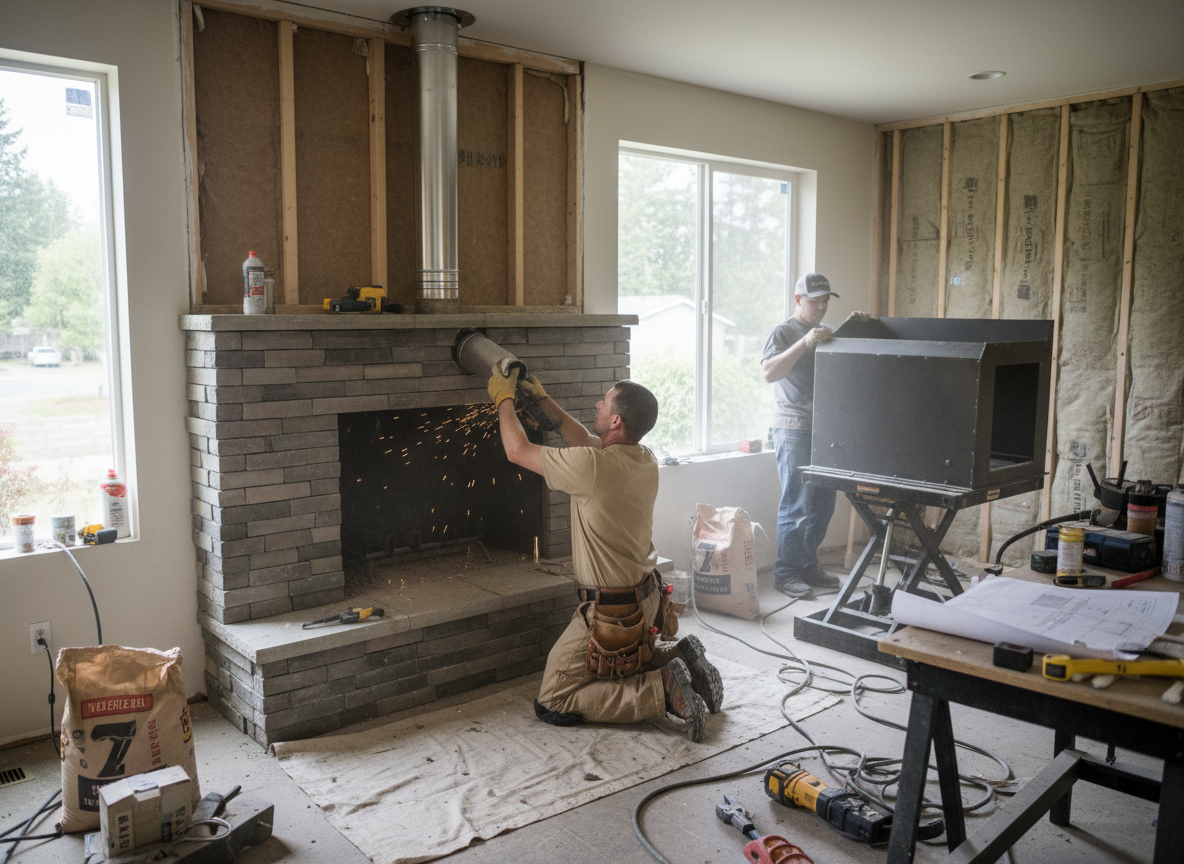
Milwaukie homes in neighborhoods such as Ardenwald and Hector Campbell often date to the 1940s through 1970s, with masonry chimneys that have settled on the area’s clay-heavy soils. Installing a new fireplace requires checking the existing flue for cracks caused by decades of freeze-thaw cycles during the region’s mild but persistently wet winters. We match the new unit to the chimney’s interior dimensions so draft and clearance meet current Clackamas County requirements without rebuilding the entire stack.
The Willamette River corridor brings higher humidity that can push moisture into flue liners if the installation does not include a proper rain cap and sealed chase. In Island Station bungalows, low roof pitches and tight attic spaces mean the new fireplace must be vented with rigid stainless liner rather than flexible pipe to maintain long-term draft. We also verify that the hearth extension meets clearance rules on older hardwood floors common throughout Downtown Milwaukie.
Warm dry summers allow us to schedule exterior work without rain delays, but the same season’s pollen and dust require thorough cleaning of the firebox before final inspection. Proper sizing prevents the short-cycling that occurs when oversized inserts are placed in smaller Milwaukie living rooms. Each installation includes a cold-smoke test to confirm the chimney draws correctly once the first wet winter arrives.
Technician insight
In Milwaukie, the thing that catches most people out with fireplace installation is the hidden settling in 1950s Ardenwald chimneys; the flue often leans just enough that a standard insert won’t seat without a custom offset, and the wet winters turn that small gap into a leak by November.
Island Station Bungalow Fireplace
The homeowner called after their 1962 Island Station fireplace smoked on first use. We found the original clay liner cracked from soil movement near the river. We installed a new stainless liner and sealed the chase against winter moisture. The unit now draws cleanly and the family uses it through the wet season without issues.
How it works
- 1
Site Assessment
Measure the existing chimney, inspect for settling cracks common in Clackamas County clay soils, and confirm attic and roof clearances in homes near Milwaukie Riverfront Park.
- 2
Unit Selection
Match fireplace size and venting requirements to the home’s age and roof pitch, factoring in the higher moisture load from the Willamette River.
- 3
Liner and Prep Work
Install stainless-steel liner and seal the chase against winter rain while protecting nearby Portland commuters’ homes from dust during the dry summer window.
- 4
Final Fit and Test
Set the unit, extend the hearth, and run a cold-smoke test to verify draft before the first wet season.
Pricing
Cost depends on chimney condition, liner length, and whether masonry repair is needed; we provide an upfront written quote after the site visit.