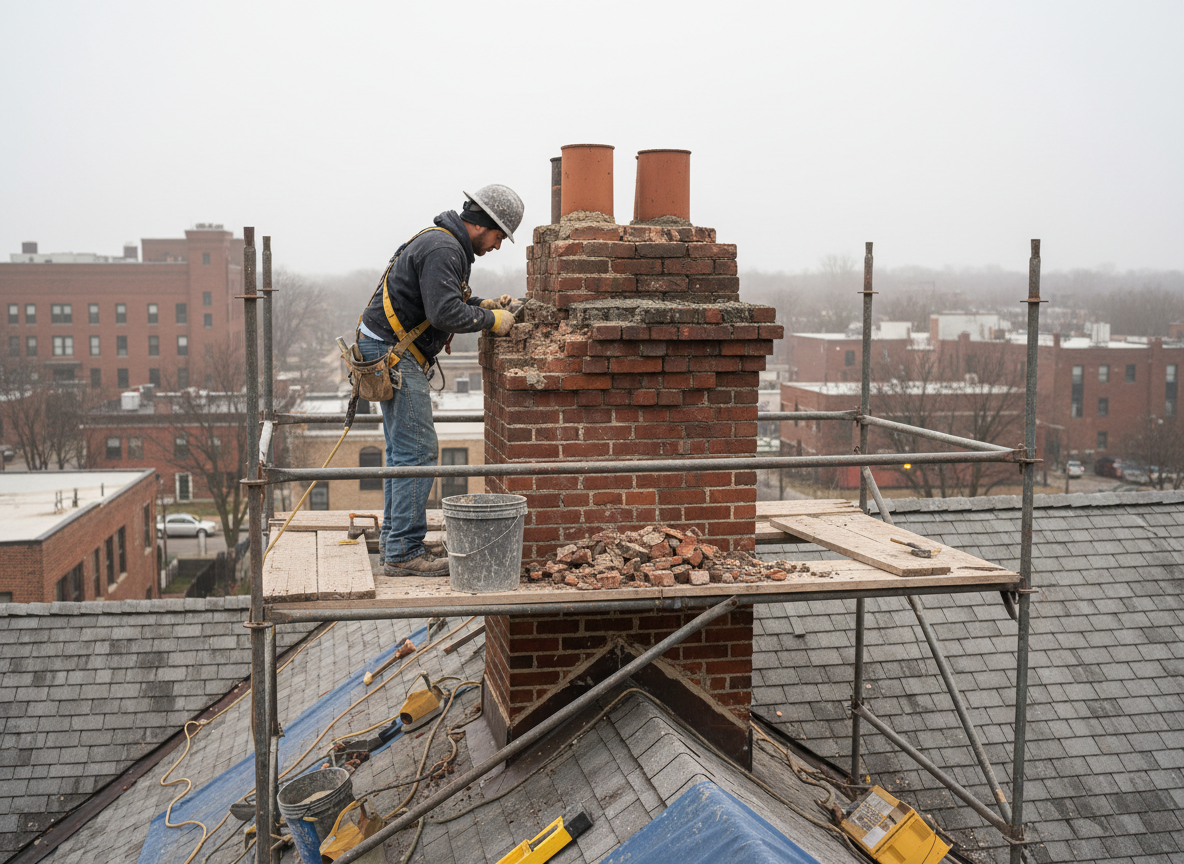
Chimney restoration in Milwaukie often starts with assessing water intrusion through failed crowns or loose flashing on homes built before 1970 in neighborhoods like Ardenwald and Hector Campbell. Mild wet winters keep masonry saturated for months, allowing freeze-thaw cycles to crack mortar joints and spall bricks while warm dry summers hide the damage until creosote staining appears inside. Restoration typically requires removing deteriorated brick, installing new flue liners rated for the home's fuel type, and rebuilding the crown with a slope that sheds rain rather than pooling it. Homes near the Willamette River and Milwaukie Riverfront Park face extra humidity that accelerates rust on metal components.
In Clackamas County, many Island Station and Downtown Milwaukie properties still have unlined or clay-tile flues that no longer meet current clearance rules when wood stoves are added. Restoration crews must verify proper clearances to combustibles, install stainless-steel liners with insulation where needed, and seal the top with a chimney cap sized for local wind patterns off the river. Edge cases include shared chimneys between older duplexes where one side has been abandoned, requiring careful separation to prevent smoke migration. Skipping these steps leads to repeated water leaks into attics during the next wet season.
Restoration work here also accounts for soil movement along the riverbanks that can tilt chimneys slightly over decades, stressing the connection at the roofline. Technicians check for carbon monoxide pathways created by cracked clay tiles and recommend parging only after confirming the flue is structurally sound. Materials must handle repeated moisture without trapping vapor, so breathable lime-based mortars are preferred over modern Portland cement mixes that can accelerate deterioration in this climate.
Technician insight
In Milwaukie, the thing that catches most people out with chimney restoration is hidden water damage behind the brick on pre-1960 homes in Ardenwald and Island Station. The mild wet winters keep everything damp long enough for mortar to fail from the inside out, especially on chimneys close to the Willamette River where humidity stays high even in summer.
Ardenwald Chimney Leaking After Heavy Rain
Homeowner noticed water stains on the living room ceiling during a wet winter. Inspection revealed failed crown and cracked clay tiles allowing rain to run down the flue. Crew removed the damaged crown, installed a stainless liner with insulation, and rebuilt the crown with a steeper pitch. No further leaks occurred through the following seasons.
How it works
- 1
Initial Inspection
Technician climbs and photographs the chimney exterior and interior from the roof and fireplace, checking for cracks, spalling, and water stains in Milwaukie homes.
- 2
Damage Assessment
Detailed report notes mortar condition, liner integrity, and any tilt caused by local soil conditions near the Willamette River.
- 3
Material Selection
Appropriate stainless liners, breathable mortar, and crown mix are chosen to withstand repeated wet winters without trapping moisture.
- 4
Restoration Work
Dismantle damaged sections, install liner, rebuild crown and flashing, then test draft and seal all joints.
- 5
Final Verification
Second inspection confirms clearances, proper slope, and no remaining water entry points before cleanup.
Pricing
Upfront quotes provided after on-site inspection; cost depends on height, liner type, and extent of masonry repair needed.