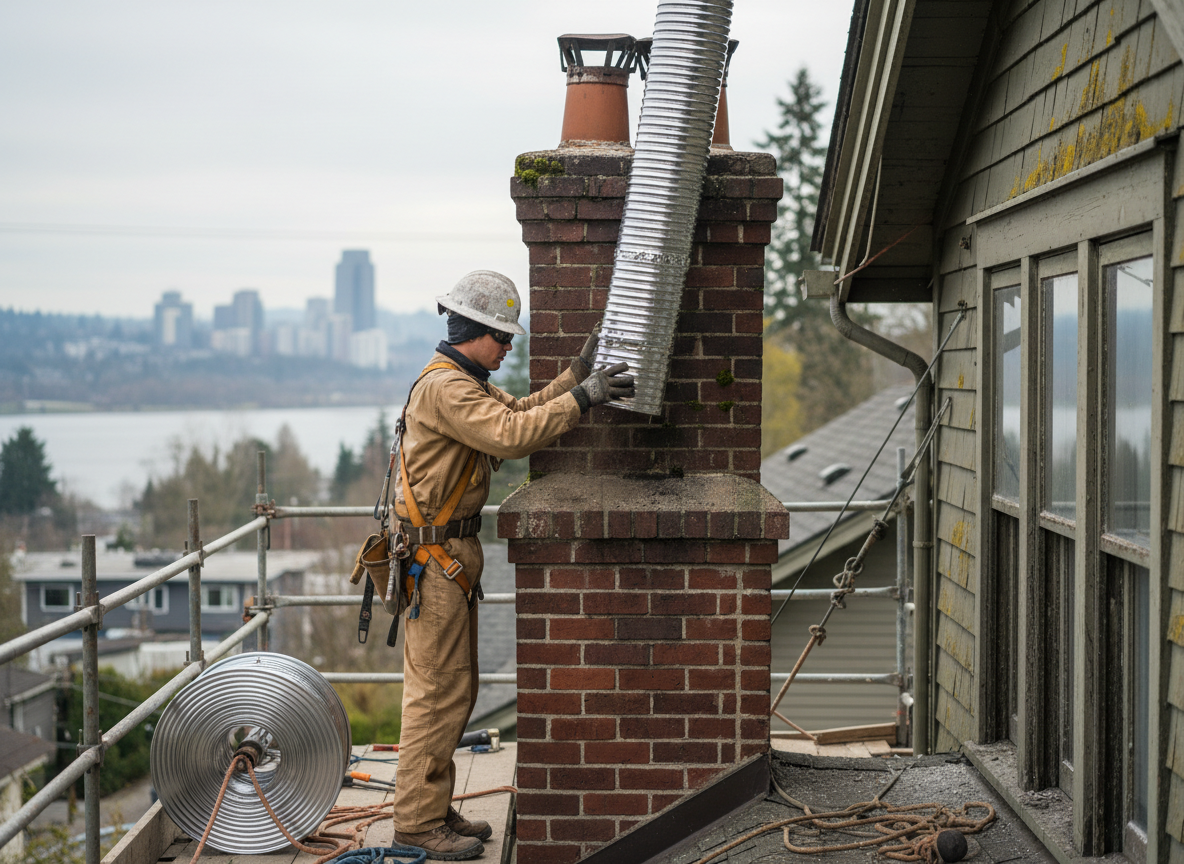
Milwaukie homes in neighborhoods like Ardenwald and Island Station often feature masonry chimneys from the mid-20th century that were never fitted with modern liners. Wet winters along the Willamette River drive constant moisture into flue joints, breaking down clay tiles and allowing creosote to trap water against the brick. When we open these chimneys the damage usually shows first at the smoke chamber where water pools during the long rainy season.
A proper liner repair here starts with a camera inspection to map cracks before any material is chosen. Stainless steel or cast-in-place liners both work but cast-in-place gives better insulation against the temperature swings between warm dry summers and cold wet winters. We always pull permits through Clackamas County because liner work changes the flue size and affects how the fireplace drafts on older two-story homes in Hector Campbell.
Homeowners in Downtown Milwaukie sometimes try to ignore slow leaks until the ceiling below the chimney stains. By then the liner has already failed and the chase may need reframing. We carry the materials on the truck so the job finishes in one day when the liner is the only issue.
Common Causes of Liner Failure in Clackamas County
Wet winters keep flue temperatures low so condensation forms daily. Older homes near Milwaukie Riverfront Park also sit on clay soil that holds water against the foundation, pushing moisture upward into the chimney base.
Technician insight
In Milwaukie the thing that catches most people out with chimney liner repair is how the long wet winters keep the flue damp year-round so even a small crack in an older Ardenwald chimney lets water run down into the smoke chamber and rot the framing before anyone notices.
Leaking Chimney in Island Station
A homeowner in Island Station called after noticing water stains on the living room ceiling during a wet winter. We found the original clay liner cracked at the smoke chamber where river moisture had pooled for years. We removed the broken sections and installed a stainless steel liner sized for the fireplace. The draft improved and no further leaks appeared after the next rain.
How it works
- 1
Camera Inspection
We run a high-definition camera from the top down through the flue to locate every crack and blockage.
- 2
Material Selection
We choose stainless steel or cast-in-place based on the existing flue size and how the home is used during Milwaukie winters.
- 3
Old Liner Removal
Damaged clay tiles or metal sections are taken out carefully so the masonry chase stays intact.
- 4
New Liner Installation
The new liner is set and sealed at both the top and bottom with high-temperature caulk rated for local weather cycles.
- 5
Final Draft Test
We perform a smoke test and check draft with the fireplace cold and hot to confirm proper function before leaving.
Pricing
Cost depends on chimney height, access from the roof, and whether the old liner must be broken out.