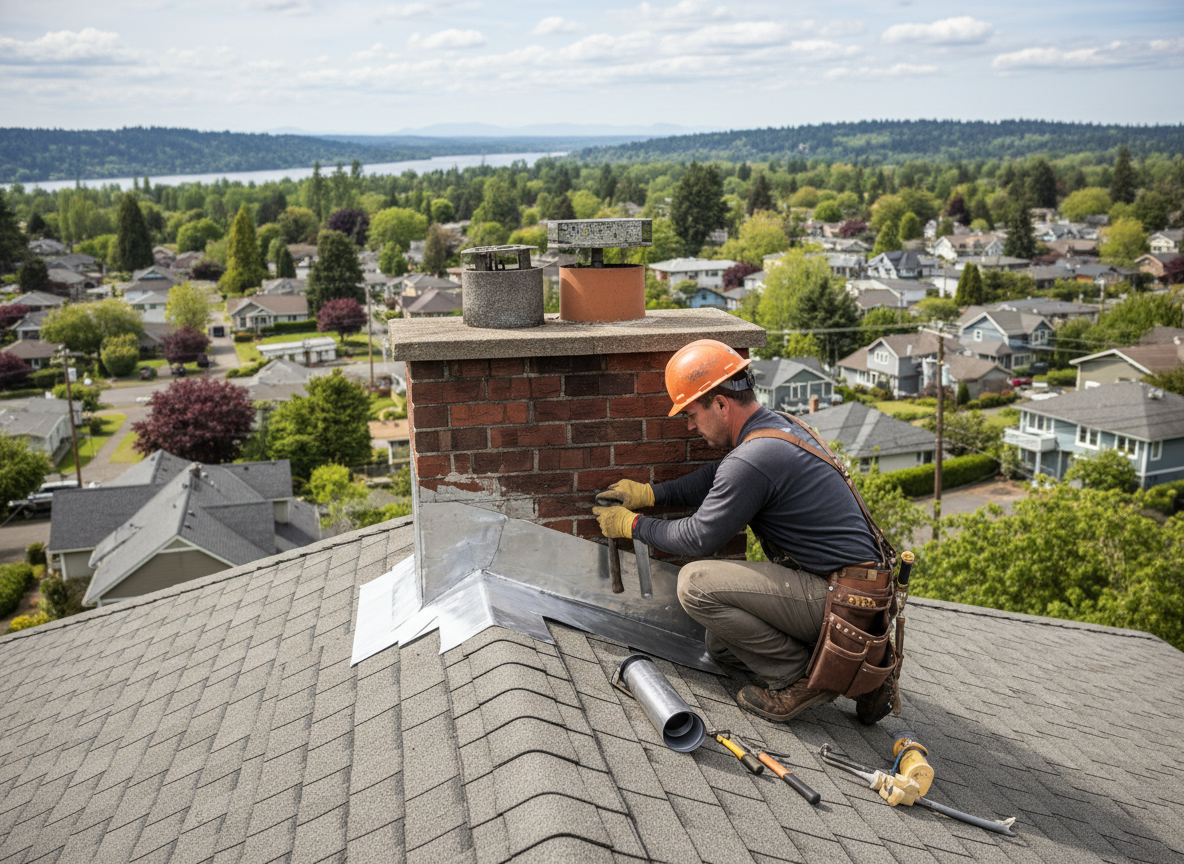
Milwaukie’s mild wet winters send repeated moisture against chimneys on homes built before 1970 in Ardenwald and Hector Campbell. These older brick stacks often have step flashing that has pulled away from the mortar joints or corroded where it meets the roof plane. When water finds those gaps it travels behind the brick and shows up as ceiling stains two or three floors below. Proper repair means cutting out the damaged sections, installing new 26-gauge galvanized or copper step flashing with correct overlaps, and integrating new counter-flashing into the chimney mortar rather than relying on sealant alone.
Homes in Island Station sit close to the Willamette River where humidity stays higher year-round. That extra moisture accelerates rust on older lead or galvanized flashing, especially on south- and west-facing roofs that also bake during the warm dry summers. A common failure point is the cricket or saddle behind the chimney; if it was never flashed correctly, water pools there during heavy winter rains. We remove the old cricket, rebuild it with pressure-treated lumber and new step and counter-flashing, then tie everything into the existing roof underlayment so the repair lasts through multiple wet seasons.
Clackamas County code requires flashing to be installed with a minimum 4-inch overlap and to be embedded at least 1 inch into the chimney mortar joint. Many do-it-yourself attempts in Downtown Milwaukie use only caulk or roof cement, which cracks within two winters. We always remove the first course of shingles above the chimney, install new step flashing, then reinstall shingles with proper nailing so there are no exposed fasteners. After the metal work is complete we run a controlled water test from the roof to confirm no water enters the attic or living space.
Technician insight
In Milwaukie the thing that catches most people out with chimney flashing repair is how our wet winters keep driving water against the south side of older brick chimneys in Ardenwald and Hector Campbell while the dry summers bake the sealant people try to use instead of proper metal flashing.
Persistent Leak Above Island Station Kitchen
Homeowner noticed water stains after several days of winter rain. We found corroded step flashing where the chimney met the roof plane on a 1960s home near the Willamette. We removed the failed metal, installed new galvanized step and counter-flashing tied into the mortar joints, rebuilt the cricket, and reset the shingles. No further leaks appeared during the remaining wet season.
How it works
- 1
Site Inspection
We examine the chimney crown, mortar joints, existing flashing, and roof plane from both inside the attic and on the roof in neighborhoods such as Ardenwald and Island Station.
- 2
Material Assessment
We determine whether galvanized, copper, or stainless flashing is needed based on roof type, slope, and exposure to river humidity common along the Willamette in Milwaukie.
- 3
Flashing Removal and Replacement
Old flashing is cut out, new step and counter-flashing is installed with correct overlaps, and the cricket is rebuilt if required.
- 4
Integration and Testing
Flashing is embedded into the mortar, shingles are reset, and a water test confirms the repair holds before we leave the job in Clackamas County.
Pricing
Upfront quotes provided after on-site inspection; cost varies with chimney height, roof access, and whether a cricket rebuild is required.