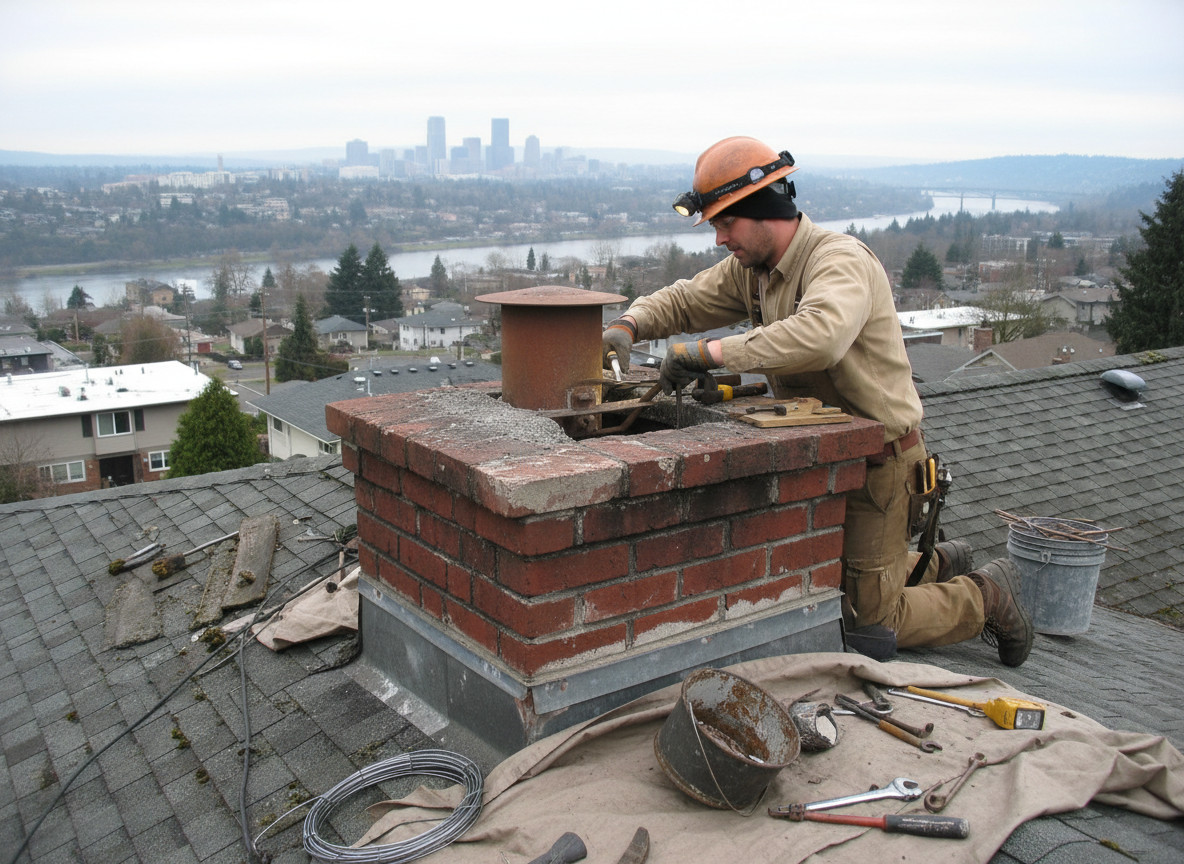
Milwaukie homes in neighborhoods such as Ardenwald and Island Station often feature fireplaces installed decades ago when the area was still building out along the Willamette River. These older dampers frequently corrode from the mild wet winters that bring prolonged moisture, causing the metal plates to stick or fail to seal. A technician must check both the throat and the flue lining because river humidity accelerates rust that can crack cast-iron components over time.
In Clackamas County the shift from warm dry summers to cool damp winters creates expansion and contraction cycles that loosen damper hinges and seals. Homeowners in Downtown Milwaukie and Hector Campbell commonly notice smoke spillage only after the first hard rain because summer dust masks early binding. Proper repair involves removing the damper assembly, cleaning scale from the pivot points, and replacing worn gaskets with materials rated for repeated moisture exposure rather than standard replacements that fail within two seasons.
Repair work here also requires attention to the narrow chimney chases common in 1950s-1970s Milwaukie construction, where limited access means the job cannot rely on full chimney rebuilds. Technicians verify that the new damper sits level so it closes tightly against the smoke chamber walls, preventing cold air infiltration that raises heating costs during the long wet season. Skipping this step often leads to callbacks when residents report drafts even with the damper closed.
Technician insight
In Milwaukie, the thing that catches most people out with chimney damper repair is how the mild wet winters rot the hinges on pre-1980s dampers in Ardenwald and Island Station homes near the Willamette River, where river humidity keeps the metal damp even in summer and homeowners keep forcing stuck plates until they snap.
Stuck Damper in Ardenwald Home
Homeowner in Ardenwald reported smoke entering the living room after the first fall rains. Inspection showed the original cast-iron damper had rusted at the pivot points from years of Willamette River moisture. The plate was removed, the throat cleaned, and a new stainless damper with sealed bearings was installed. The system now closes tightly and no longer allows backdraft during wet weather.
How it works
- 1
Initial Inspection
Access the damper from the firebox and flue to assess corrosion, hinge wear, and seal condition in the specific chimney configuration.
- 2
Component Removal
Detach the existing damper plate and hardware while protecting the smoke chamber masonry from additional damage.
- 3
Cleaning and Preparation
Remove rust scale and old gasket material, then verify the throat dimensions before selecting replacement parts suited to wet-climate exposure.
- 4
Installation and Testing
Fit the new damper, adjust for level closure, and test operation from the firebox to confirm a tight seal against backdraft.
Pricing
Upfront quotes provided after on-site inspection; final cost depends on chimney access and parts needed.